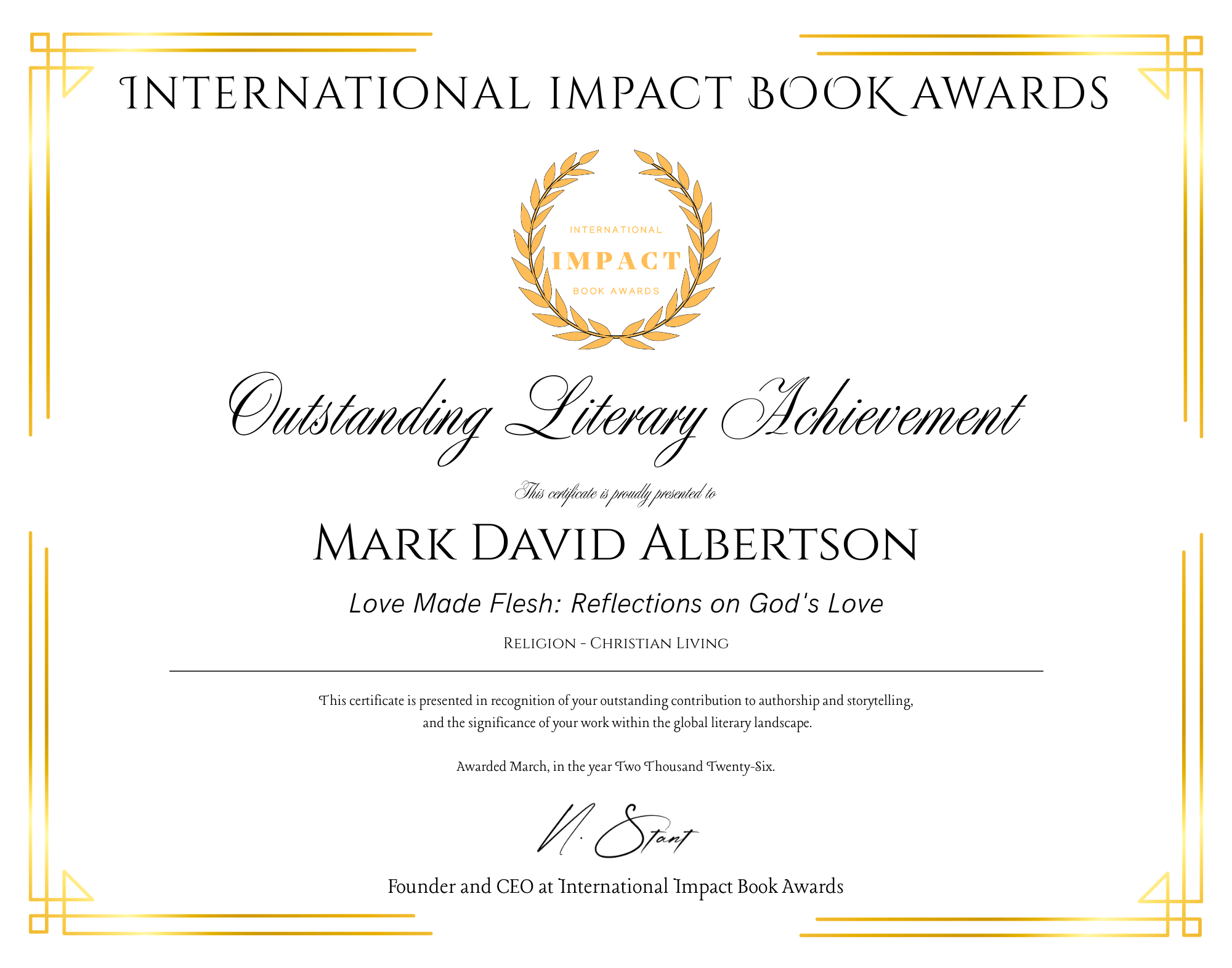
By Rev. Dr. Mark David Albertson
Forgiveness has always been one of those ideas that sounds beautiful in theory but feels nearly impossible in practice. It’s like standing at the edge of a high diving board — you know jumping is the right thing to do, but every instinct in your body is screaming, don’t move.
It’s easy to talk about forgiveness when we’re not the ones bleeding. But once someone’s words or actions have cut deep, forgiveness becomes the hardest gift to give — and the hardest one to receive.
Yet, if we believe Jesus meant what he said, forgiveness isn’t optional. It’s not the fine print of faith. It’s the heartbeat of it.
The Stone We Carry
I once read a story about a man who carried a smooth river stone in his pocket. Every time someone hurt him, he would carve a small mark into it. One mark for each betrayal. One for every disappointment. Over time, the stone grew rough and heavy. One day, worn down from carrying it everywhere, he walked to a stream, opened his hand, and let it fall into the water. Watching it sink, he said quietly, “I realized I was the only one still carrying the weight.”
That image has stayed with me. Because that’s what unforgiveness is: a heavy stone we keep in our pockets, polishing it with our pain. Sometimes we even grow attached to it. We think, If I let this go, how will I protect myself? How will they know they hurt me?
But forgiveness isn’t pretending the stone never existed. It’s choosing to set it down. And maybe that’s what Jesus was trying to teach us — that the act of setting it down is not a weakness, but an act of holy rebellion.
Peter’s Question
In the Gospel of Matthew, Peter comes to Jesus with a question that probably came straight from the human heart:
“Lord, how many times should I forgive my brother or sister who sins against me? Up to seven times?”
Now, that was actually generous. Jewish law at the time suggested that forgiving someone three times was plenty. So Peter doubles it, adds one, and looks to Jesus as if to say, How’s that for spiritual maturity? But Jesus replies, “Not seven times, but seventy-seven times.”
In other words: stop counting. Forgive until you lose track. Forgive so much that math can’t measure it anymore. Jesus wasn’t creating a new rule — he was breaking the system. Forgiveness, in his world, wasn’t virtue; it was vulnerability. It wasn’t power; it was foolishness. Yet Jesus turned that upside down.
And then, as if to make sure no one could accuse him of easy talk, he lived it. On the cross, he looked at those who mocked and murdered him and said, “Father, forgive them, for they know not what they do.” In that moment, forgiveness became flesh. That single act turned the logic of the ancient world — and our modern one — inside out. Because in a world obsessed with payback, Jesus showed that grace is the only thing strong enough to stop the cycle.
The Math of Mercy
In first-century Palestine, forgiveness wasn’t a cultural expectation; it was a risk. Honor and shame governed everything. You hurt me, I hurt you back — that was how the system stayed balanced. To forgive was to lose standing. So when Jesus told his followers to forgive seventy-seven times, he wasn’t being poetic. He was launching a revolution. He wasn’t just teaching private morality; he was proposing a new kind of society. A kingdom not ruled by fear or fairness, but by mercy.
Forgiveness was, and still is, one of the most radical political ideas in human history. It dismantles the very structure of revenge. It interrupts history’s endless loops of retaliation. When we forgive, we aren’t just letting someone off the hook. We’re rewriting the story.
The Age of the Screenshot
Fast forward two thousand years, and we still haven’t learned the lesson. We live in what I like to call “the Age of the Screenshot.” Every mistake is saved, shared, and stored in the cloud forever. Every careless word can be replayed on demand. We’ve replaced grace with gotcha. And yet, all of us — every single one — are desperate for the same thing: a second chance. Forgiveness sounds lovely until it’s our turn to extend it. But here’s the truth: when we hold onto anger, the one most poisoned by it is us.
Years ago, I was recovering from a nasty divorce, and in the middle of it was forced to take a leave of absence due to some substantial health issues. I moved into a cottage in Ocean Shores, Washington, which was pretty isolated. I decided to volunteer at the local food pantry. I felt like giving back might get me out of my own self-absorbed blues. There was another volunteer there — I’ll call him Tony. He’d been through a lot: years on the street, burned bridges, bad choices. But he had this unshakable kindness about him. He’d greet everyone in line by name. When he wasn’t serving food, he’d be fixing coffee, laughing, helping someone find a coat. One morning, I asked him, “Tony, how do you stay so kind after everything you’ve been through?”
He thought for a moment and said, “You can’t feed people with a closed fist.”
That line hit me like a prayer. Forgiveness opens the hand. And once it’s open, it can receive and give again.
The Power Shift
Most of us resist forgiveness because it feels like surrender. It feels like saying, You win. What you did was fine. But forgiveness isn’t about the other person’s power — it’s about reclaiming your own. It’s saying, You no longer control my peace.
Forgiveness doesn’t mean forgetting. It doesn’t mean tolerating injustice. It means refusing to let the injury define you. That’s why Jesus could forgive from the cross. He wasn’t excusing sin — he was defeating it. Forgiveness is freedom disguised as surrender. It’s not giving up power; it’s taking it back.
The Mirror Test
Let’s pause for a moment. Who are you still carrying around in your heart like that heavy stone? What name, what face, what memory still stings when it drifts across your mind? And — this one’s harder — have you forgiven yourself? Sometimes the hardest person to forgive is the one in the mirror. We replay old regrets like scratched records: I should’ve known better. I should’ve done more. But grace doesn’t stop at the edge of your own reflection. Jesus never said, “Forgive everyone except yourself.”
The same love that calls you to forgive others calls you to release your own shame. Sometimes self-forgiveness isn’t arrogance; it’s obedience. It’s trusting that God’s mercy really is that wide.
Forgiveness as a Journey
If you’ve ever tried to forgive, you know it’s not a switch you flip. It’s a process. You might forgive someone today and feel the wound reopen tomorrow. That doesn’t mean you’ve failed. It means you’re healing. Forgiveness is less like cutting a ribbon and more like tending a garden — slow, messy, sometimes painful, but eventually full of life. It happens over time, in layers. You forgive the first offense, then the betrayal, then the silence that followed. And every time you choose grace over bitterness, you’re choosing life over death.
Forgiveness and Justice
Now, because I serve a progressive congregation, I need to name something that often gets twisted: forgiveness does not mean pretending injustice didn’t happen. Forgiveness does not excuse abuse, silence the oppressed, or cancel accountability. Forgiveness in the way of Jesus is not passivity — it’s active resistance. It’s standing up to evil and saying, “You don’t get to write the ending of this story.”
When Jesus forgave his executioners, he wasn’t excusing them — he was exposing the emptiness of their power. When he told the woman caught in adultery, “Go and sin no more,” he wasn’t minimizing her pain — he was restoring her dignity.
Forgiveness without justice is sentimentality. Justice without forgiveness is cruelty. But when they walk hand in hand — that’s the kingdom of God.
Grace in the Flesh
Forgiveness isn’t just something that happens in our heads or hearts. It’s something that looks like action. That’s why our church’s ministry to the homeless isn’t charity — it’s forgiveness in motion.
When we hand a sandwich to someone who’s been forgotten by society, we’re forgiving a system that abandoned them. When we clothe someone who’s been humiliated by poverty, we’re forgiving an economy that treats people like disposable parts. We’re not condoning the brokenness. We’re living out grace in defiance of it. Forgiveness, in this sense, is the most subversive form of hope there is. Every time we choose compassion over cynicism, we’re declaring that the world’s cruelty will not have the last word.
The Humor of Humanity
Of course, forgiveness isn’t always glamorous. Try forgiving someone while driving in Henderson traffic and you’ll know what sanctification feels like in real time. Jesus said forgive seventy-seven times, but I’m pretty sure he didn’t mean all before the next red light. We laugh, but it’s true. We’re human. We get angry. We’re slow to let go. And yet, God keeps forgiving us — seventy-seven times seventy-seven.
Every time we show up in church, every time we say, “Lord, have mercy,” we’re stepping into that cycle of renewal again. So, if you’re struggling to forgive — congratulations, you’re human. You’re right where grace does its best work.
Letting the Stone Go
I often picture forgiveness as standing by that same stream from the story earlier. You’re holding the stone — the anger, the resentment, the memory that won’t go away. It’s heavy. You’ve carried it for so long it almost feels like part of you.
But there comes a day when you’re ready — not because they deserve it, but because you do. You open your hand. You let the stone fall. The water doesn’t erase it. It carries it.
That’s what God does with our sins — carries them away.
The Psalmist wrote, “As far as the east is from the west, so far has God removed our transgressions from us.” That’s divine geometry — infinite distance. And when we forgive, we align our hearts with that same geometry of grace.
Forgiveness in Practice
So how do we do it? How do we move from talking about forgiveness to actually living it? Here are three practices that have helped me — and maybe they’ll help you, too.
1. Name the Wound.
You can’t heal what you won’t name. Pretending something didn’t hurt doesn’t make it holy. God can handle your honesty. Say it out loud: That hurt me.
Naming the wound doesn’t make you weak — it makes you truthful. And truth is the soil where forgiveness grows.
2. Release the Debt.
Forgiveness is not about pretending there was no harm. It’s about releasing the demand for repayment.
That doesn’t mean you stop caring about justice — it means you stop letting resentment be your accountant.
You may never get an apology. You may never get closure. But you can still choose peace.
3. Practice the Grace You’ve Received.
Every time you forgive, you’re reflecting what God has already done for you.
You’re extending the same mercy that met you when you didn’t deserve it.
And that’s the secret: we don’t forgive because we’re perfect. We forgive because we’ve been forgiven.
Forgiveness as Resurrection
In the end, forgiveness is really another word for resurrection. It’s what happens when something dead — a relationship, a heart, a hope — comes back to life. Forgiveness is resurrection in slow motion. It turns graves into gardens, wounds into wisdom, pain into purpose. It’s not glamorous. It’s not easy. It’s not fast. But it’s the only path that leads us back to life. Every time we forgive, we join Jesus in that movement from death to new creation. That’s why forgiveness is the heartbeat of the gospel. It’s not a footnote to grace — it’s the rhythm of it.
The Call
Maybe today, as you read this, there’s a name pressing against your heart. Someone you swore you’d never forgive. Someone who took something from you that can’t be replaced.
Or maybe the person who needs forgiving is you. You can start small. Write a letter you’ll never send. Say a prayer for someone who hurt you. Do one small act of kindness for someone who can’t repay you. Forgiveness doesn’t have to be perfect to be holy. It just has to begin. And when it does, you’ll find that something begins to shift inside you. The stone gets lighter. The water moves freer. And maybe — just maybe — you’ll hear God whisper, “Let me carry that for you.”
Epilogue: The Wideness of Mercy
There’s an old hymn that says, “There’s a wideness in God’s mercy, like the wideness of the sea.” That’s forgiveness — wide, deep, and unending. It doesn’t deny the pain. It doesn’t erase the scars. But it transforms them. In a world obsessed with punishment, forgiveness is the revolution no one sees coming.
It’s the quiet work of saints and sinners alike.
It’s the hard gift that frees the giver first. So, if you’re standing at the edge of that stream, stone in hand, wondering if it’s time, Trust me. It is.
Let it go. And watch how grace carries it away.